Go to main contentsGo to main menu
Sunday, July 5, 2026 at 10:54 AM

Conservation group calls for new Medina Lake water management

Conservation group calls for new Medina Lake water management
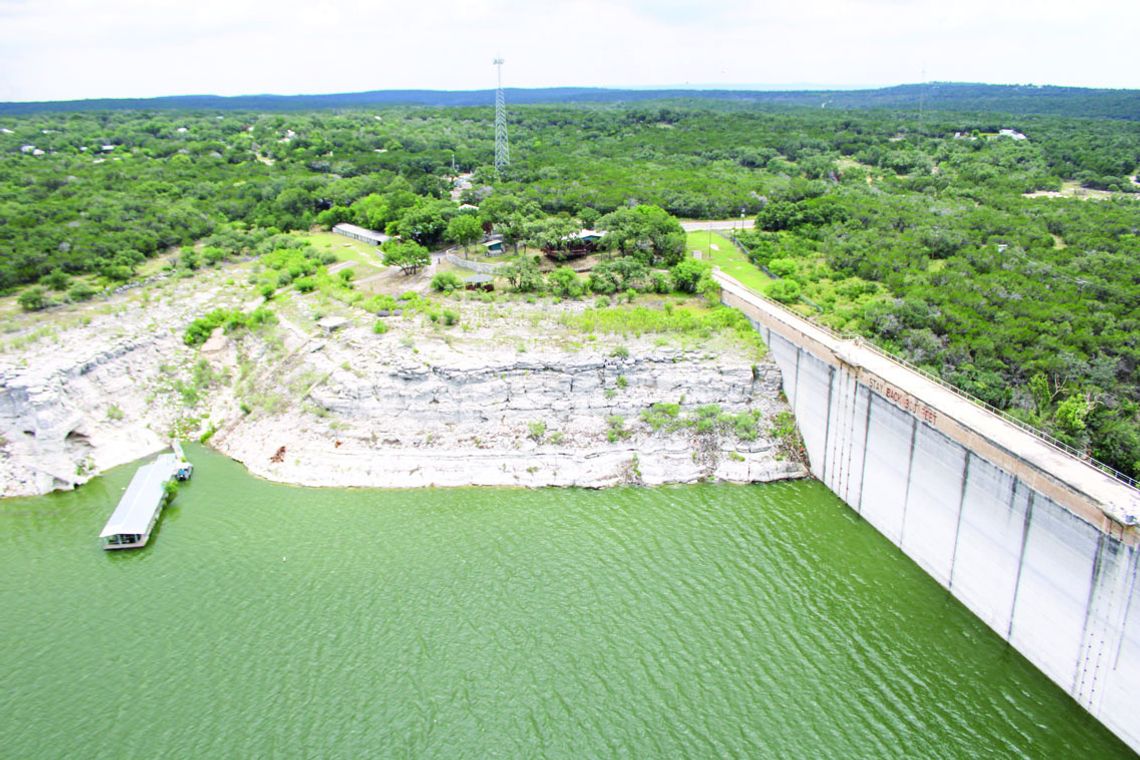
BULLETIN PHOTO/ Veronica Rector An aerial view shows the dam at Medina Lake, which is managed by the Bexar-Medina-Atascosa Irrigation District. A local conservation group is calling for changes to the district's water management practices, arguing they have contributed to prolonged low lake levels.

Editor's note: This story has been updated to reflect that the Bandera County River Authority and Groundwater District (BCRAGD), not SAWS, settled a lawsuit in 2022. This article will be reprinted with the correction. The Bulletin apologizes for the error. 

A longtime Medina County conservation group is calling for the closure of the century-old Bexar-Medina-Atascosa (BMA) Irrigation District dam at Medina Lake, arguing that the district's water management practices have prevented the lake from recovering from years of drought.

The lake was constructed primarily as an irrigation reservoir serving approximately 300 farmers, who purchase irrigation water for about $36 per acre-foot.

Conservation advocates say that model no longer reflects the region's population growth, the economic importance of the lake to surrounding communities or Medina Lake's role in recharging the Edwards and Upper Trinity aquifers.

'We were down to 2% at one point,' local homeowner and conservation advocate Rachel Mulherin said. 'We are now up to 5.8%.

And much of the water is released from the dam, sent down 312 miles to the farmers, who are not getting any water now. They haven't for years. So, no one benefits from it.'

Mulherin, along with local Realtor Michelle Reichle and Sunset Resort at Medina Lake co-owner Sarah Voss, said they hope to meet with BMA stakeholders to discuss changes to how the lake is managed.

'BMA has a conservation level that they do not abide by,' Reichle said. 'And we have approached the Texas Commission on Environmental Quality with that, and nothing.'

Reichle said she is also concerned about the impact low lake levels have had on fish and wildlife.

'Ten years ago, after we got out of the drought, the Texas Parks and Wildlife organization restocked the lake with fish,' Reichle said. 'Now, the fish are in a very small part of the water. All the animals are having to travel further to the water. It just affects everything.'

Reichle, who sells waterfront properties around Medina Lake, said the declining water levels have also affected the local economy.

'I'm selling waterfront properties with hardly any water,' Reichle said. 'Our lake used to draw people in — it's taken an impact on our local businesses. Thankfully, Sunset Resort is set on the best water.'

The conservation group is proposing a transition from surface water irrigation to groundwater by installing wells closer to agricultural properties, a proposal the group said is supported by a 2024 U.S. Geological Survey study.

'We honestly thought it would never happen again when we went dry 10 years ago,' Reichle said. 'But here we are 10 years later, and they've drained the lake again.'

The conservation group also contends Medina Lake has experienced water quality issues because of what it describes as an antiquated dirt canal system.

The group's concerns come as BMA continues to face legal disputes over water management.

In 2022, BMA reached an agreement with the BCRAGD in which it agreed not to claim regulatory authority over water conservation efforts.

In 2024, BMA asked a judge to dismiss a lawsuit filed by SAWS seeking to invalidate a long-term water supply agreement. SAWS alleges it has been required to pay for water BMA has been unable to deliver, while BMA disputes those claims.

In February 2025, the Fourth Court of Appeals ruled that the trial court should first consider BMA's jurisdictional arguments before allowing discovery to proceed.

'The problem is that only BMA district voters have a say,' Mulherin said. 'Stakeholders, including SAWS, don't get to have a say in how the water is managed.'

State Rep. Wes Virdell, whose office the group contacted, issued the following statement to the Bandera Bulletin: 'Our research confirms that Medina Lake was originally constructed as an agricultural reservoir to support the region's farming needs and food production. While recreation has become a cherished secondary benefit for countless families and visitors, the priority remains preserving its primary agricultural purpose until any change is formally evaluated and determined through the appropriate process.

'As a kid who grew up on the water and my granddad being the chief designer for Glastron for 30 years, I love being on a lake. I want to see all lakes full year-round, but that often isn't the case.

'Water in Texas has become as precious as oil. With each legislative session we are trying to address the complicated water issues facing Texans. That is why I joined the Texas Water Caucus to search for realistic solutions such as SB 616, which supports an increased water supply for the Edwards Aquifer through an amendment authorizing aquifer storage and recovery projects. We will address similar concerns in the next session as well.

'In the interim, we welcome ideas for resolutions directly from the people. Please call or email our office with any recommendations at 830-730-5925 or district53.virdell@house. texas.gov.

'Additionally, if someone upstream of Medina Lake is inappropriately using the water, it needs to be addressed. If folks are illegally pulling water from the lake, that also needs to be addressed. If you know of someone doing this, please let my staff know so we can notify the proper agency.'

The Bulletin reached out to BMA for comment but had not received a response by press time.

More information about the conservation group's efforts is available at Save-MedinaLake.com.


Share
Rate

Ad
E-EDITION
DOWNLOAD OUR APP