Editor's Note: The Bulletin neglected to mention that The Frontier Times Museum, Bandera County Historical Commission, and The Silver Sage Senior Center were organizers of this annual event.
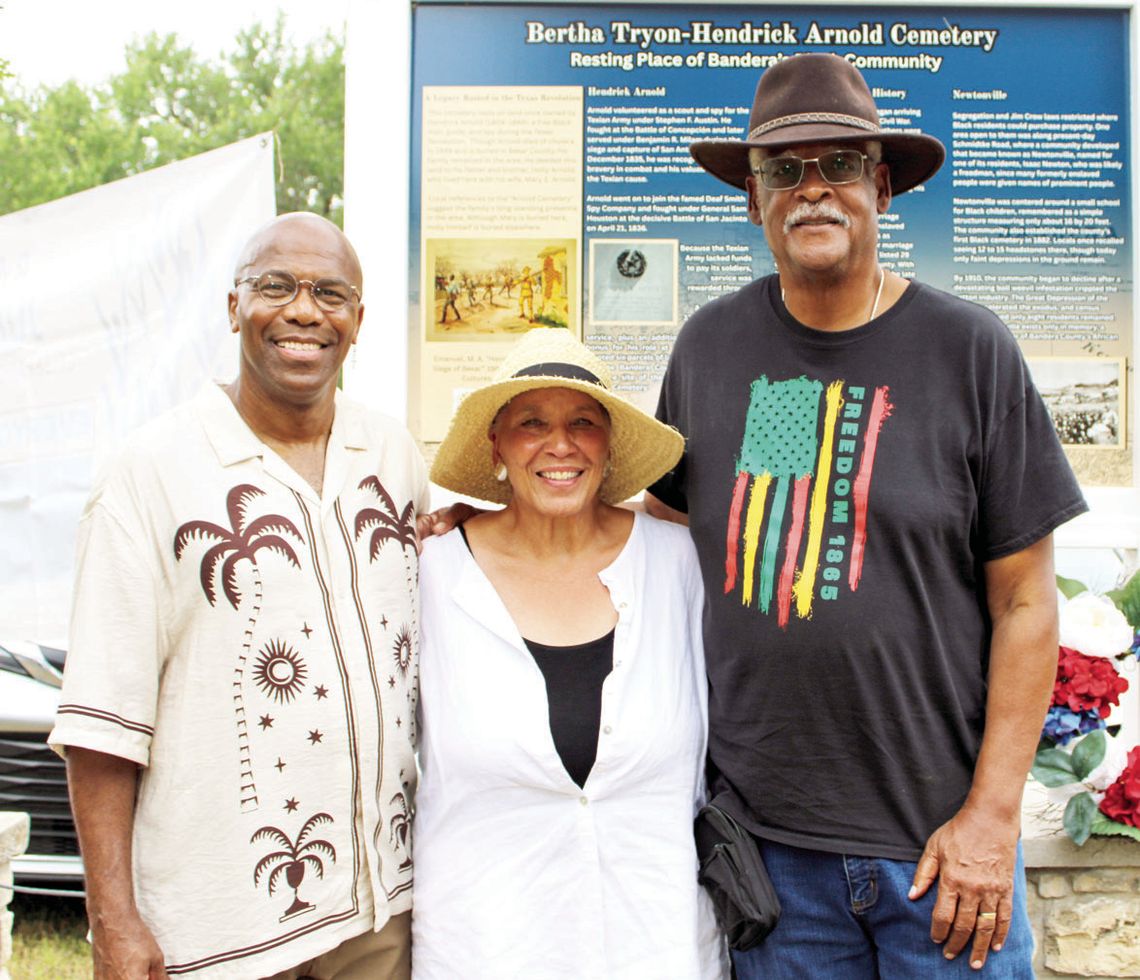
Bandera County residents gathered at the historic Bertha Tryon Hendrick Arnold Cemetery on Juneteenth to honor the legacy of the county's Black community through poetry, music and reflection.
With the talent organized by Suzanne Jackson, board chair of the Bandera Natural History and Art Museum, the event featured original poetry by Da'Rell Pittman and musical performances by Gayle Waden.
Pittman's poem was written in honor of an ancestor who came to the New World as an enslaved person. A portion of the poem reads: 'Because of you, we are a family of poets, healers and philosophers ... we are a family of warriors, clergy and peacemakers ... it is the greatest symbol of a man's collective hope, that humanity can live together in peace and equality.'
Pittman said the poem was inspired by a question asking which historical figure he would most like to meet. The question led him to reflect on his ancestor and the opportunity he never had to know them.
'I thought about what they went through, crossing the Door of No Return in Senegal,' Pittman said. 'A huge percentage of slaves went through this one town, but a lot of Africans jumped off the ship and committed suicide. If my ancestor had done that, then I wouldn't be here talking to you.'
Pittman said he wishes he could thank his ancestors for their courage.
'Thank you for putting up with it, for surviving,' Pittman said. 'We're flourishing because of you. And I would love to tell him or her that.'
cy of the county's Black community.
The Juneteenth Jubilee, now in its fourth year, drew a slightly smaller crowd than in previous years.
'But we've always brought in a great community,' Jackson said. 'The community part is really important. Da'Rell brings such a wonderful part to it because celebrating our heritage is more than who we are now. It's about our ancestors.'
Asked about controversy surrounding Juneteenth, Pittman suggested much of it stems from misunderstanding.
'I think a lot of people don't know what Juneteenth actually is,' he said.
Juneteenth is a federal holiday commemorating June 19, 1865, when enslaved African Americans in Galveston learned they were free — more than two years after President Abraham Lincoln issued the Emancipation Proclamation.

.png)