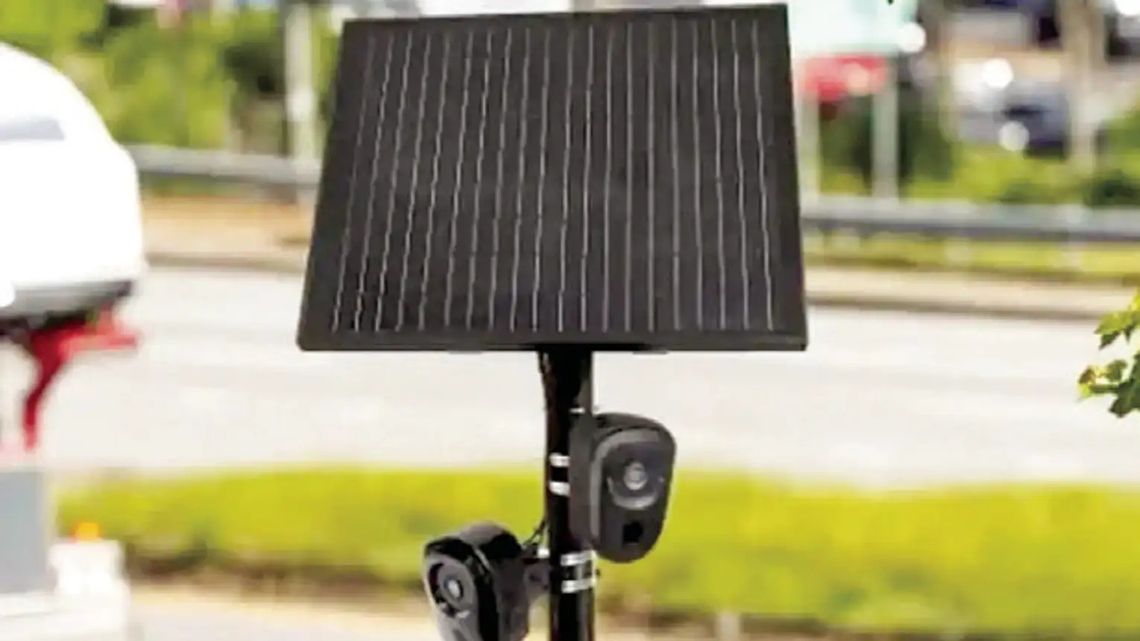
Bandera city officials responded to a wave of public criticism over Flock Safety license plate reader cameras at the March 24 meeting with a mix of clarification, concern and internal disagreement during a tense council meeting that ended without a final vote.
Residents raised questions about privacy, transparency, cost and oversight during public comment. In the discussion that followed, council members and city staff addressed those concerns — at times revealing confusion about the agreement itself and the financial consequences of canceling it.
Below is a breakdown of key concerns raised by the public and how city officials responded.
1. Should the cameras be removed entirely?
“I make a motion to deactivate and remove all Flock safety cameras effective immediately,” Mayor Pro-Tem Deanna McCabe said after public comment concluded.
McCabe said she had prepared the motion despite being unexpectedly asked to run the meeting.
“This is actually my item… I had no intentions of running this meeting — I found out five minutes beforehand that I was,” she said.
2. Was the contract properly approved and disclosed?
McCabe said she was unable to locate clear documentation showing council approval of the agreement.
“I was looking to — trying to put my hands on our contract [with Flock], and the only thing I could find was a work order,” she said. “If their terms and conditions were changed after we signed that, I’m not sure if we were privy to that.”
“I did not see any minutes that reflected the signing of the contract… and that was my concern,” she added.
3. What actually counts as the contract?
City Attorney Matt Groves said the agreement is tied directly to the grant funding the cameras.
“So, the grant is the contract,” Groves said. “You’re authorizing to apply for what you’re agreeing to — all those terms — to apply for that grant… That is the contract, is the grant.”
4. What happens financially if the city cancels the program?
City officials said the city could still be responsible for paying for the system.
“If the camera was already activated… the money still has to be paid,” City Secretary Jill Dickerson said. “Whether the cameras are up or not, the city still has to pay the invoice… and then the grant company will want the grant money back from the city.”
City Administrative Assistant Stephanie Biggs said the total invoice exceeds the grant amount.
“The amount of that invoice is seventeen thousand and one dollar… leaving us liable for the twenty-eight hundred and thirty four dollars,” Biggs said. “If you’re going to pull us out of the contract, then we are responsible for that full amount.”
5. Why would the city owe money it hasn’t received?
Officials said the grant operates on a reimbursement basis.
“It’s a reimbursement program,” Biggs said.
Groves added that the structure is typical of grant-funded projects.
“The city’s not actually paying for — you’re applying for a grant… the state’s reimbursing,” he said.
6. Could canceling affect future funding?
Groves warned the decision could have broader consequences.
“This will affect you moving forward with grants,” he said. “This could affect you on a federal level as well.”
7. Did council members fully understand the agreement when it passed?
Council Member Debbie Breen questioned whether the implications were clear at the time of approval.
“You were a proponent for this; did you know all this?” Breen asked Council Member Jeff Flowers.
Flowers responded by noting the previous council’s unanimous vote and prior presentations on the system, including training tied to securing the grant.



.png)