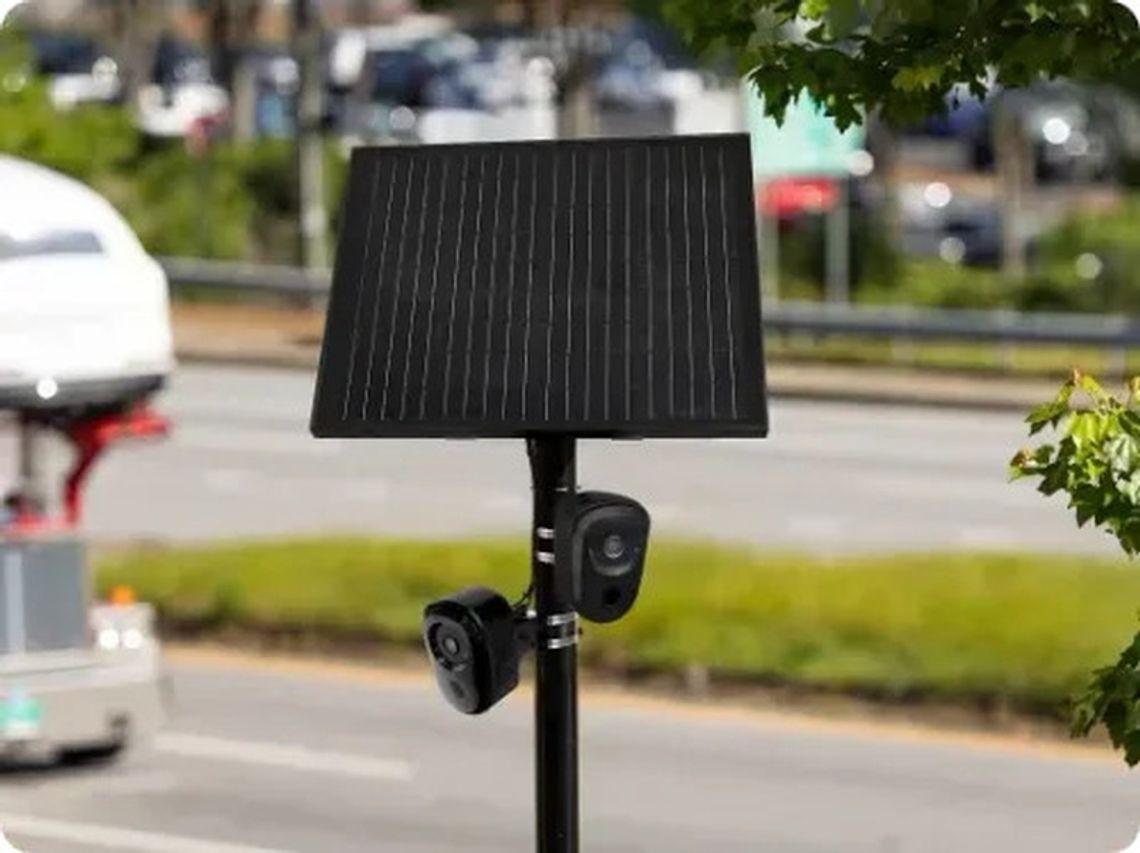
Vandalism and growing privacy concerns are intensifying debate over Bandera’s plan to install Flock license plate reader cameras at two city entrances, with city officials directing further discussion to a public town hall meeting Wednesday evening.
The issue drew extended public comment during Feb. 10's Bandera City Council meeting, where three residents spoke against further installations. By the end of the discussion, council members agreed broader conversation would be best held at a town hall meeting set for 5:15 p.m. Wednesday at 511 Main St. A moderator will be in attendance.
According to information on Flock Safety’s website, the company operates a nationwide network of license plate reader cameras designed to help law enforcement identify and track vehicles in real time. Flock states that its technology is intended to support public safety efforts and is configurable to local laws and agency policies. The company says agencies maintain control over how the data is accessed and used.
Bandera’s City Council voted last May to move forward with a Motor Vehicle Crime Prevention Authority grant under Senate Bill 224 to begin implementing Flock security cameras at the city’s two entrances. The grant awarded the city $14,000 toward a total $17,000 expense. Flock revised its original proposal from four cameras to five at no additional cost.
Opposition intensified after the installation of a “condor” camera near Tractor Supply on Highway 173 was vandalized the day before Tuesday’s meeting, halting further installations.
Resident Leanna Keith questioned not only the cameras but the broader direction of the city.
“The core issue isn’t just the cameras, it’s the direction we’re taking,” Keith said. “It’s often framed as a safety or tech upgrade, but the fundamental question is what kind of town is Bandera becoming?”
Keith asked whether the council had consulted professionals regarding potential biological, environmental and community impacts tied to the infrastructure.
“Those professionals should be environmental scientists, RF (radio frequency) surveyors, local ecologists, soil and water specialists and long-term zoning planners, not just IT engineers or sales reps,” she said.
Keith offered peer-reviewed research she said outlined environmental risks, including stress oxidation of water and potential impacts to soil systems and plants in a rural area such as Bandera.
“You stated already that your concerns are Texas water availability,” Keith said. “You’re laying the foundation and infrastructure to cause stress oxidize water removal. Ignorance doesn’t remove responsibility.”
Another resident, Jason Mayhew, cited George Orwell’s novel “1984,” arguing that Flock systems were laying the groundwork for a “big brother all-watching society.” Mayhew also challenged Council Member Jeff Flowers’ earlier statement that Flock systems do not use facial recognition.
“(After revisions) In 2023 they allowed for facial recognition and live database transmission,” Mayhew said, adding that independent researchers had used Flock’s data systems to track personal information, including medical records.
Council Member Lynn Palmer noted that those who spoke during public comment do not live within city limits.
“Everyone that spoke does not live in the city limits,” Palmer said. “Flock will be in the city only, not the county.”
Addressing privacy concerns, Palmer added, “They can get all that information from a phone search.”
Flowers said the cameras do not capture front-facing views.
“It’s a license plate reader,” Flowers said. “When you’re in a public area, privacy goes out the window.”
Administrative Assistant Stephanie Biggs said four of the cameras are “falcons,” which record vehicles and do not track individuals. The fifth camera, the “condor,” includes pan, tilt and zoom features and allows for manual control.
Flowers said Flock would not have access to stored data and that the city would maintain control over information generated by the system. Mayor Denise Griffin said Marshal Earl Heidelberg and his deputies are certified and trained to use Flock systems.
Council Members Debbie Breen, who initially supported the grant, and Deanna McCabe presented a list of cities that have backed away from Flock cameras because of lawsuits and privacy concerns, referencing Austin and San Marcos.
According to the Austin Police Department, the city revised its program to allow only still cameras, though Austin continues to use Flock systems. In June, the San Marcos City Council voted 5-2 against expanding its Flock camera program.
Flowers maintained the cameras would enhance public safety.
“Guilty people act defensively,” he said. “If you don’t have anything to hide, it shouldn’t be a problem.”
Nationally, Flock Safety has become one of the most prominent law enforcement surveillance companies in the country. According to NBC News, the company operates thousands of license plate reader cameras across the United States that identify vehicles in real time and contribute data to a centralized system accessible to participating law enforcement agencies.
Earlier this month following a Super Bowl commercial, Amazon and Flock canceled a planned partnership that would have integrated Flock technology with Amazon’s Ring doorbell “Community Requests” program.
The integration never launched, and no customer videos were shared, the companies said. The decision followed public backlash over surveillance concerns tied to related Ring features.



.png)